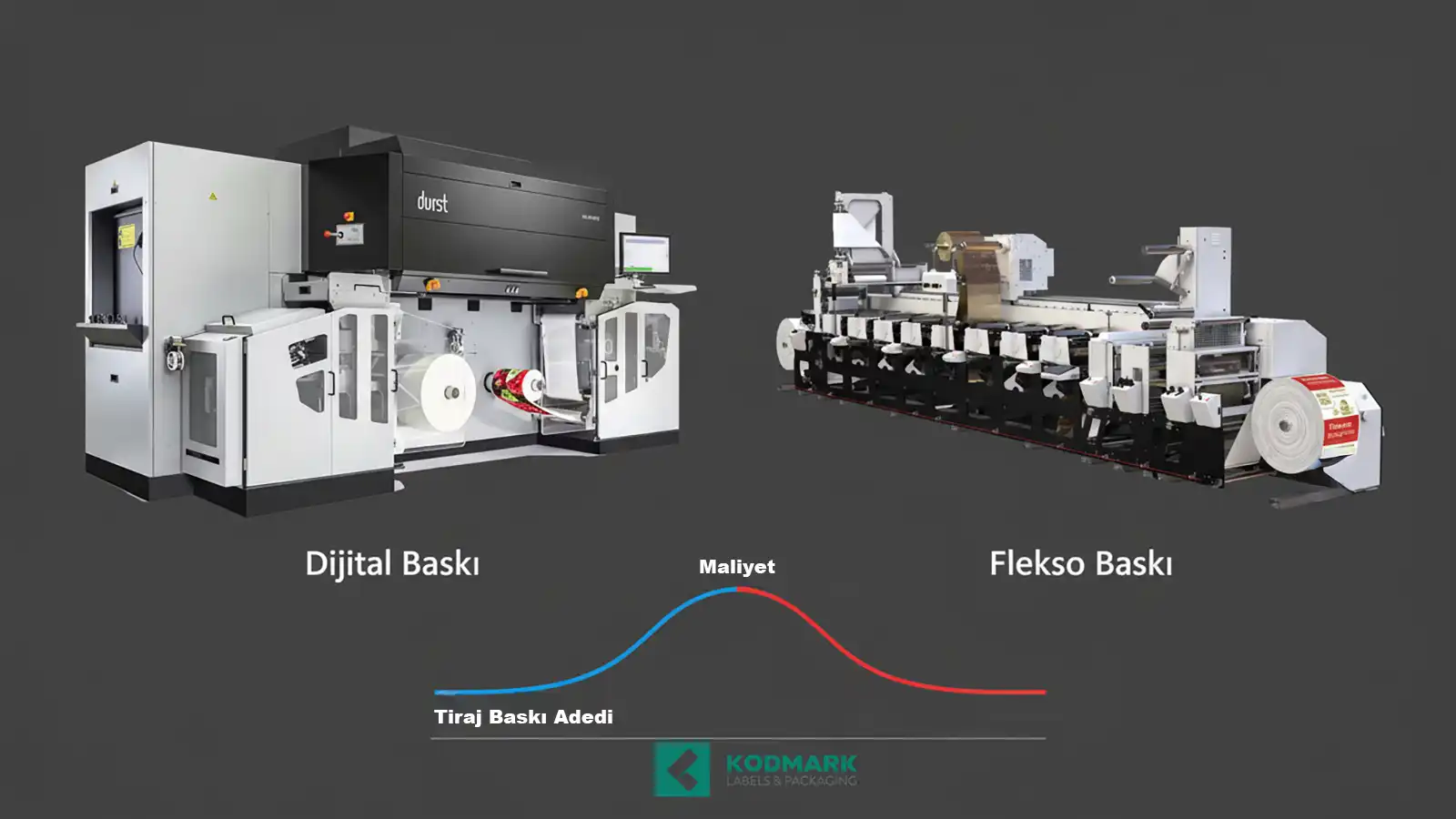
There is no single answer—the best choice depends on run length, cost, design, and marketing goals. This guide compares both side by side.
Decision Criterion 1: Run Length & Cost Efficiency
Low to Medium Runs: Digital
No plates required; printing directly from the digital file.
- When is it advantageous?
• Launches & market tests: Cost-effective at 1,000–10,000 units.
• Many SKUs: Multiple variants without extra plate cost.
High Volumes: Flexo
Requires plates, but very fast with low unit cost at scale.
- When is it advantageous?
• Above 500,000 units.
• Continuous production with stable design.
Decision Criterion 2: Design Flexibility & Quality
Creativity and Photo Quality: Digital
- Perfect for photographic images and gradients.
- Enables VDP (variable data printing).
- Ideal for seasonal or promotional runs.
Consistent Spot Colors & Inline Finishes: Flexo
- Critical when Pantone color consistency is required.
- Inline finishes like foil or lamination improve efficiency.
Conclusion
Digital offers flexibility, speed, low entry cost.
Flexo provides scalability and very low unit costs for mass production. The right choice depends on your goals.
Kodmark masters both technologies to recommend the most profitable solution for your project.
Contact us for a free analysis.