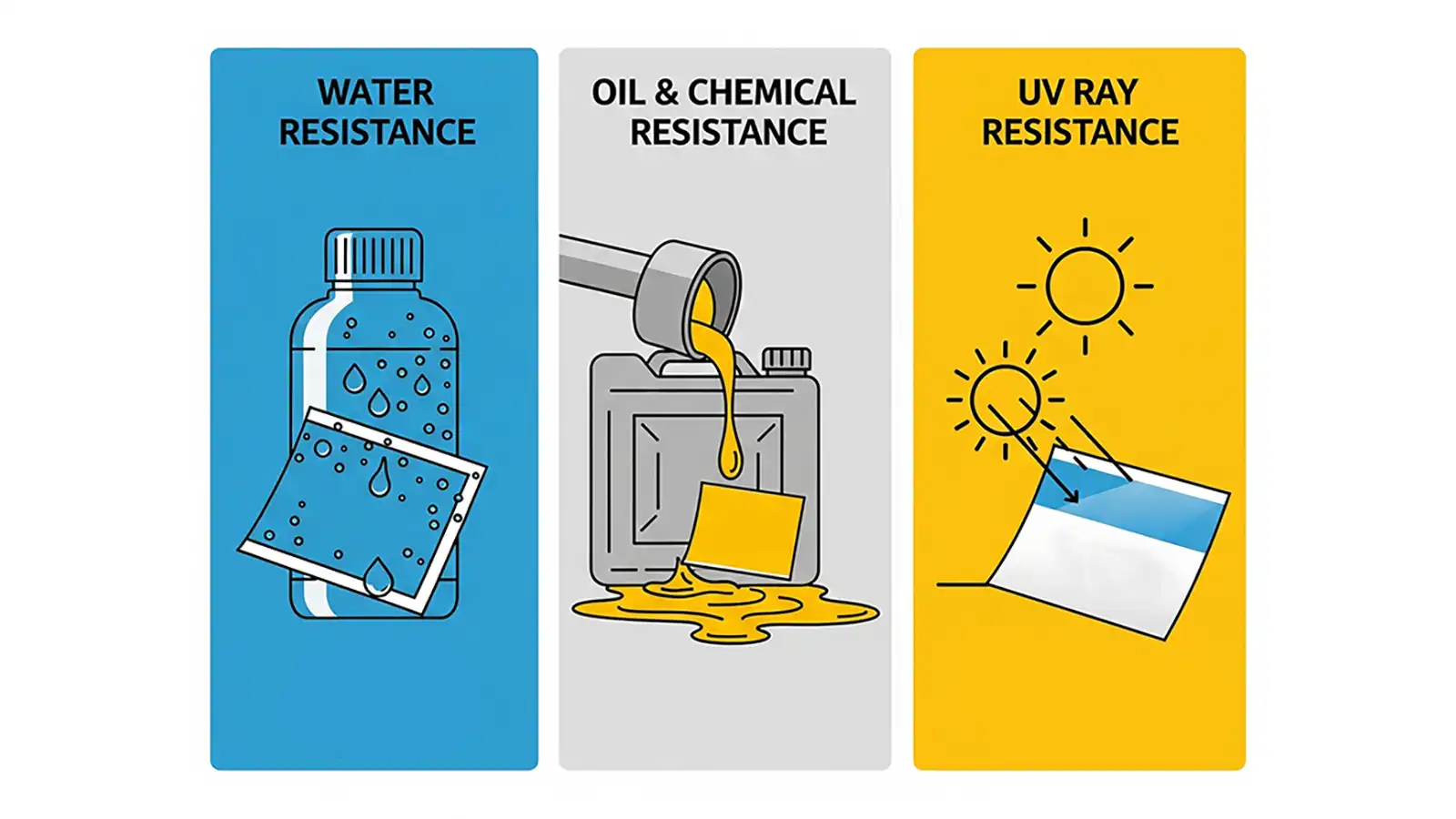
This is where performance labels come into play. So, what combination turns a label into armor against water, oil, hazardous chemicals and UV light? In this guide, we summarize the triple combination of film material + industrial adhesive + durable printing/protection.
1) First Line of Defense: The Right Surface Material (Film Labels)
Under extreme conditions, remove paper labels from the equation; the solution is film-based materials:
- PP (Polypropylene): High resistance to water, moisture and many chemicals; a reliable starting point for industrial applications.
- PE (Polyethylene): Flexible structure adapts to curved/squeezable surfaces (e.g. chemical containers); prevents edge lifting.
- PET (Polyester): The durability champion; top resistance to heat, solvents, abrasion and UV. Ideal for engine parts, machinery panels and long-term outdoor use.
For more material comparisons, see our article Paper vs. Film (PP/PE/PET).
2) Unshakeable Bond: Industrial-Grade Adhesives
No matter how strong the surface is, if the adhesive is weak, the label will fail. Harsh environments demand specialized adhesives:
- Solvent-Based Acrylic: Maintains adhesion even under aggressive chemicals, extreme hot/cold conditions and moisture. Excellent performance on LSE plastics (PP/PE).
- High-Performance Acrylic: Superior resistance to UV and oxidation; ideal for outdoor applications and products requiring long shelf life.
For a detailed look at adhesive families, check out our article acrylic vs. hotmelt vs. solvent.
3) Long-Lasting Information: Durable Printing and Protective Shield
- Printing Method: For variable data, in thermal transfer printing always use resin ribbon instead of wax; it withstands chemical exposure and abrasion. UV inkjet digital printing also provides high durability.
- Protective Shield (Lamination): A transparent overlay (commonly PET lamination) isolates the print from external factors; offering extra defense against abrasion, spills and UV fading.
Application Areas (Where Durability Saves the Day)
- Chemicals: Hazardous material drums, IBC tanks and container labels. BS5609 compliance can be critical for marine transport.
- Automotive & Machinery: Engine parts exposed to heat/oil, machinery warning labels, chassis numbers.
- Electronics: Technical info/serial number labels on heating devices.
- Outdoor & Agriculture: Equipment exposed to sun/rain for years, fertilizer/pesticide packaging.
- Logistics & Storage: Cold storage, long-life shelf/pallet labels in industrial environments.
Conclusion: More Than Just a Label — Safety and Assurance
A label designed for extreme conditions is a composite engineering product of the right film, the right adhesive and the right printing/protection technique. This solution is an investment in brand reputation, product safety and regulatory compliance.
Let’s select the right combination for your application: Contact the Kodmark experts.
Related reads: Paper vs. Film (PP/PE/PET) · Adhesive Types · Prepress Checklist